



Increase First-Time NCLEX Pass Rates — Without Adding Faculty Workload
“From lecture exposure to measurable retrieval—in 30 days.”
”
The Real Problem: Exposure Isn’t Retrieval
- Students leave lecture with familiarity, not dependable recall.
- Content overload creates false confidence (“I’ve seen this”) that collapses under test conditions.
- Remediation is expensive—in faculty time, student morale, and outcome pressure.
- You need measurable improvement without redesigning your curriculum.
Introducing the Retention Layer
- Spaced Reinforcement: scheduled review prompts to prevent decay after initial exposure
- Retrieval Practice:: QuizRx + NGN/CJMM-aligned case reps that force active recall
- RhythmRecall Cues: 30–60 second rhythmic rationales that anchor key rules for faster retrieval
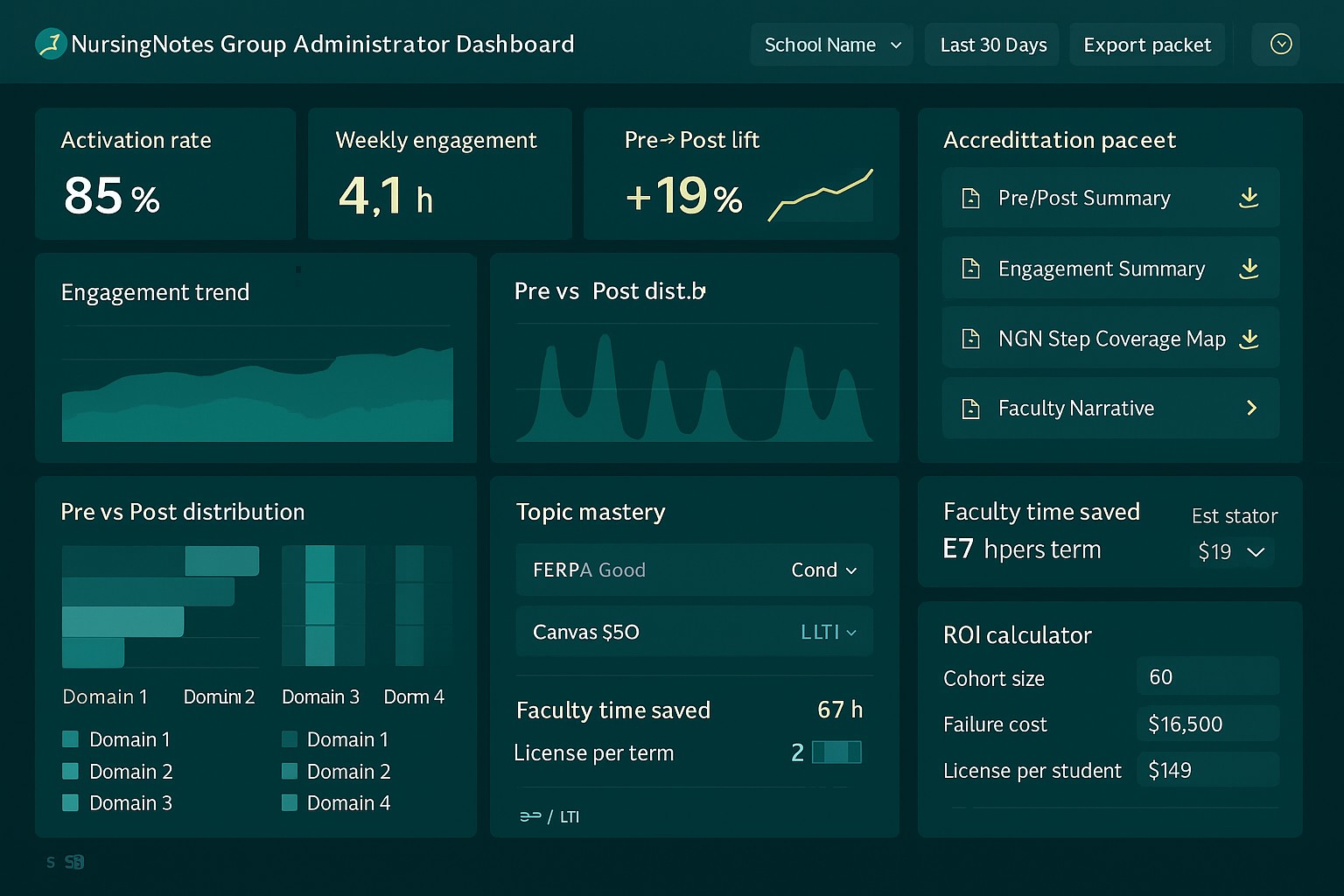
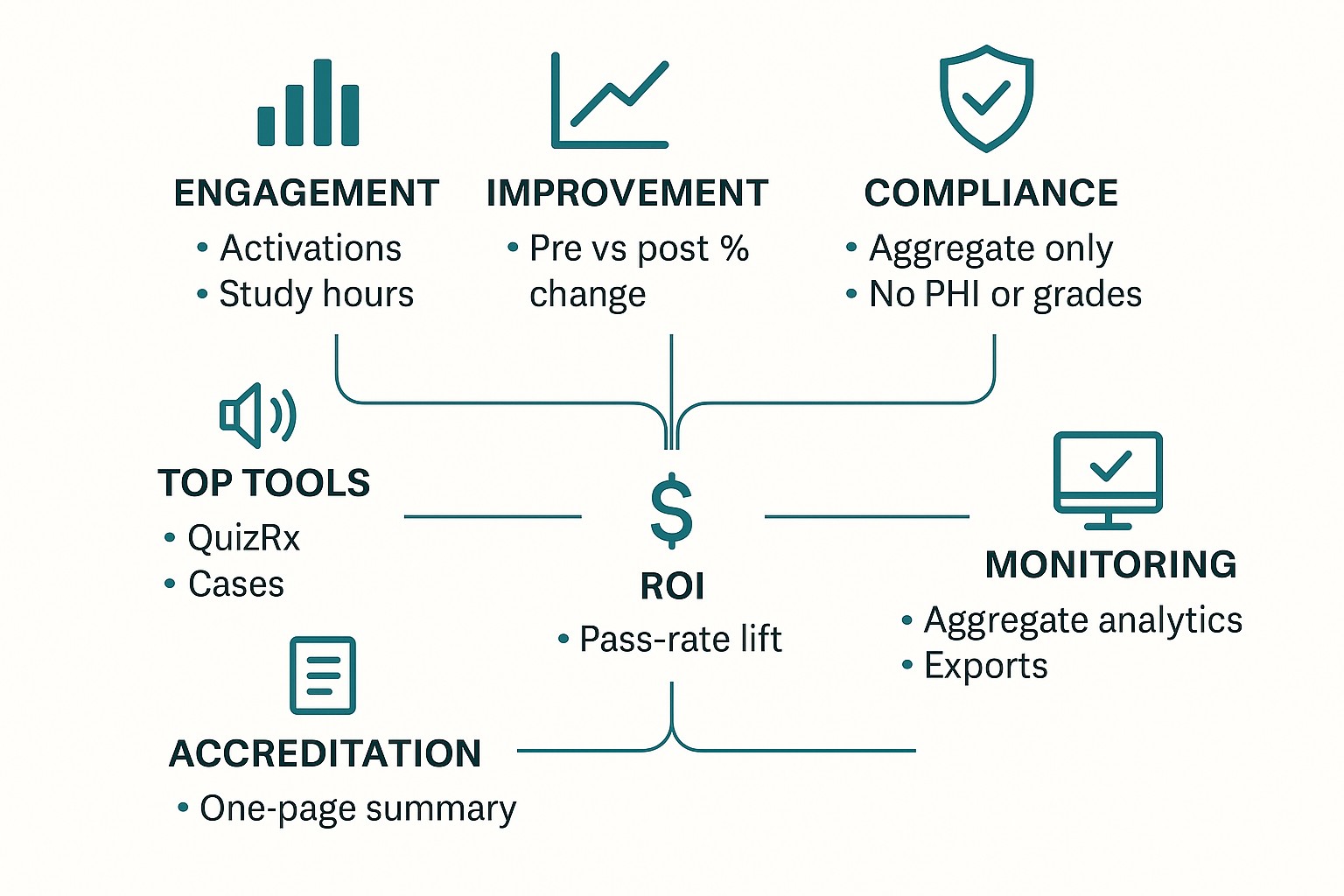
- Dean-Ready Reporting: cohort dashboards + exports that document engagement and lift

Learn

Reinforce

Recall
How It Works
Step 1. Baseline (10 quick items)
Faculty provides 10 items (or we map to your blueprint). Establish starting retrieval.
Step 2. Weekly Retrieval Cadence (no grading required)
Students complete short reps: quizzes, case scenarios, and RhythmRecall cues—built to improve recall under pressure.
Step 3. Post-Test + Accreditation Export
Measure lift, engagement, and topic mastery. Export a clean report for leadership and accreditation documentation.

QuizRx™ (Retrieval Quizzing)
Adaptive questions that target weak areas and strengthen recall.

NCLEX Case Mastery (NGN Decision Reps)
Case-style practice aligned to clinical judgment behaviors.

RhythmRecall Rationales (30–60s)
Rhythmic cues that help key rules “stick” and return faster during exams.

NeuroBeats™ (Focus Audio)
Non-lyrical focus sessions designed to support attention and study stamina during reps.
What Students Use (What You Measure)
Watch the Retention Layer at Work (2 minutes)
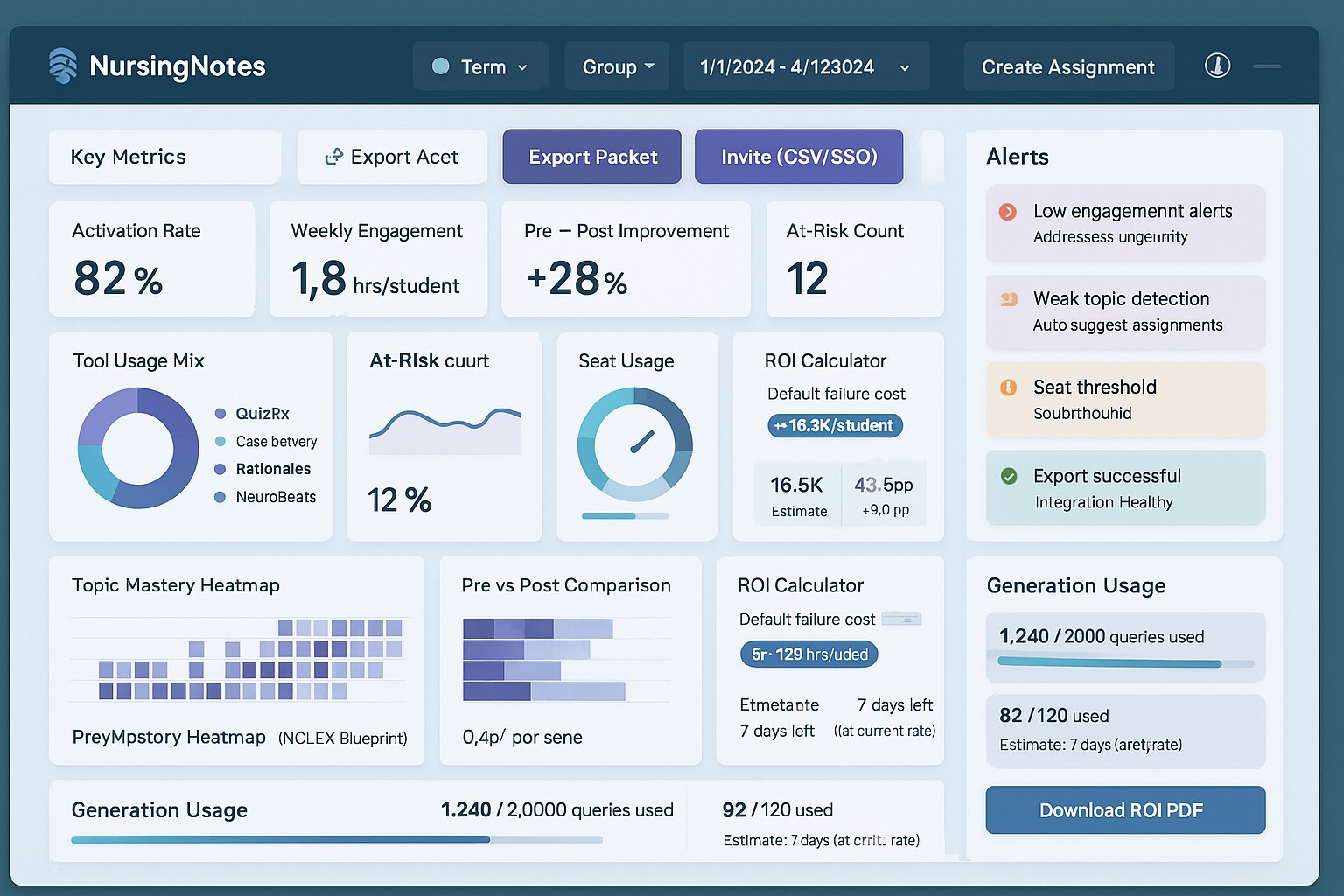
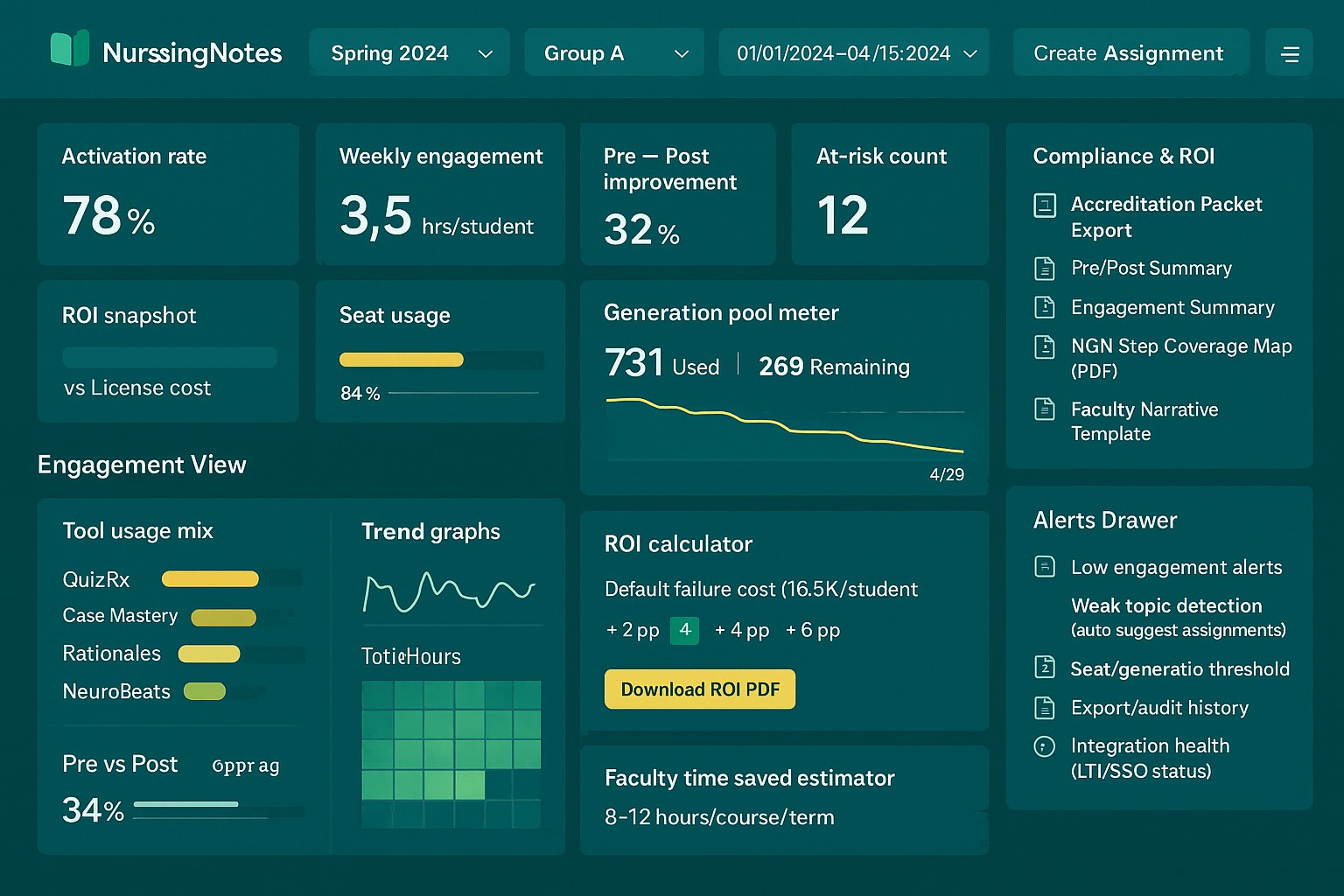
- Topic mastery heatmap
- Pre→Post improvement
- Tool usage mix (what students actually use)
- Seat usage + depletion forecast
Pricing That Procurement Won’t Hate
Per-Seat (Pay-as-You-Go)
- $149 per student
- 120 days from first login
- No cap—buy more anytime
- Org music pool top-ups available
Flat Annual Cohort License
- $5,000/year • 60 seats included • seats reassignable within the year
- Add-ons: +20 seats = +$1,000
- Each seat = 120 days from first login
- Includes 1,800 music generations/year (top-ups available)
30 Day Pilot: Designed to Increase First-Time Pass Rates
- Fast launch (no curriculum overhaul required)
- Weekly retrieval cadence that builds recall speed and accuracy
- Leadership-ready results reporting in 30 days
- Optional SSO integration available (for larger deployments)
- Credit 100% of pilot fees toward year 1 if you convert within 30 days
IT, Compliance & — Security
- FERPA-aligned (aggregate analytics; no grades)
- SSO support (SAML/OIDC; JIT provisioning; role/group mapping)
- Security (encryption in transit/at rest; least-privilege roles)
- No PHI intake (we don’t need diagnoses or medical data)
- Accessibility (captions, transcripts, keyboard navigation)
- BAA available (if your policy requires it)


ROI Calculator
ROI Calculator
Results
We apply the lower of $149/seat or $5,000 automatically.
Assumes each avoided failure averts one remediation cycle. Adjust costs to match your program.
PO/Invoice welcome • SSO included • .edu preferred.
Accreditation Packet
Ghost Cards

Engagement Summary (CSV/PDF)

NGN Step Coverage Map (PDF)

Faculty Narrative Template (DOCX)
Frequently Asked Questions
Spaced reinforcement and retrieval cues reduce memory decay. Short, rhythmic rationales make key rules easier to recall at the bedside and on exams.
No. You get aggregate pre→post outcomes, engagement, and topic mastery. No PHI/grades.
Yes—each seat provides 120 days from first login. When it expires (or a student withdraws), the seat returns to your pool during the license year.
Yes—SAML/OIDC with JIT provisioning and attribute mapping.
30 days, limited seats, pre→post flow, accreditation export on Day 31. Convert within 30 days and receive full pilot credit to year 1.
Institution-funded access is not commission-eligible. Students who later become self-pay may join the affiliate program.