Rereading can make a concept feel familiar. NursingNotes asks you to retrieve it, explains the gap, gives the lesson a memorable cue, and brings it back after a delay to see whether it held.
The NCLEX isn’t a “did you read it?” test — it’s a “can you retrieve it under pressure?” test. NursingNotes uses rhythm-based repetition to turn high-yield concepts into recall cues you can actually access when the timer is on.
Music engages attention and memory systems in the brain — and rhythm creates patterns your brain can grab fast. That’s why a chorus from 10 years ago still pops into your head instantly. NursingNotes turns high-yield NCLEX concepts into repeatable rhythm cues so recall becomes easier — not just “I’ve seen this before.
Textbooks give you exposure — but the NCLEX rewards retrieval. Music and rhythm engage attention and memory networks, which is why rhythm-based repetition can produce faster, more reliable recall than rereading another chapter.
Textbooks build familiarity. Rhythm builds retrieval. NursingNotes is designed to help concepts show up on demand — especially under time pressure.
NursingNotes converts high-yield nursing concepts into short rhythm reps you can repeat anywhere — so you’re not stuck rereading the same chapter hoping it sticks. Pick your genre (Hip Hop, R&B, Pop, Country) and build recall the way your brain actually remembers: through pattern + repetition.
Choose your favorite genre and make studying feel natural and fun. No more cramming or boring review sessions!
Overwhelmed by textbooks? Rhythm-based learning builds recall cues that help you retrieve faster and test with confidence.
Answering from memory gives you better evidence than simply recognizing the material on a page.
A layered rationale helps repair the exact misunderstanding behind the answer.
Mnemonics, rhythm, melody, and story can give the corrected lesson more ways to be found later.
Recall Proof waits, then uses a different scenario so recent exposure is less likely to masquerade as durable learning.
Music does not prove retention. It can make repetition easier and give some learners a useful retrieval cue. Recall Proof is the part of the system that tests whether the corrected learning can be retrieved later.
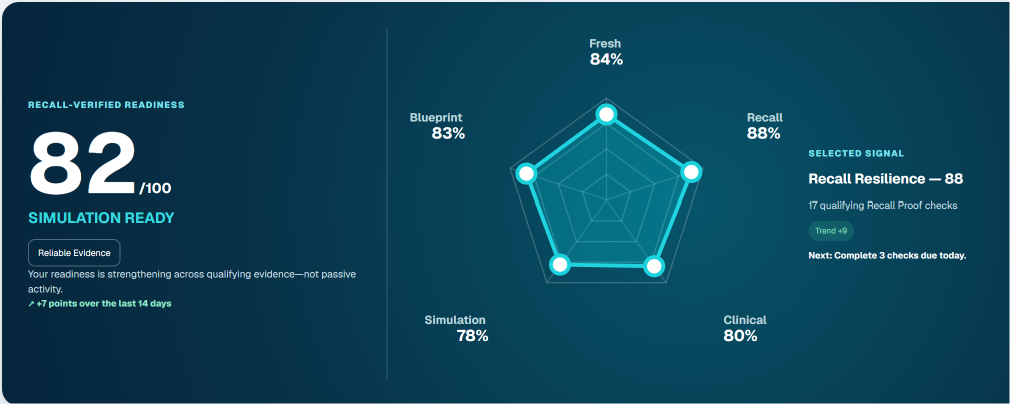
Learning activity is not automatically readiness evidence. Reading a rationale can teach you. A memory cue can help you encode the lesson. Tutor Mode can help you recover. But only qualifying fresh and delayed Test Mode performance can strengthen the QuizRx readiness signal.
Textbooks create familiarity. Rhythm builds retrieval. NursingNotes turns high-yield concepts into short rhythm reps you can repeat anywhere — so recall shows up fast when the timer is on.